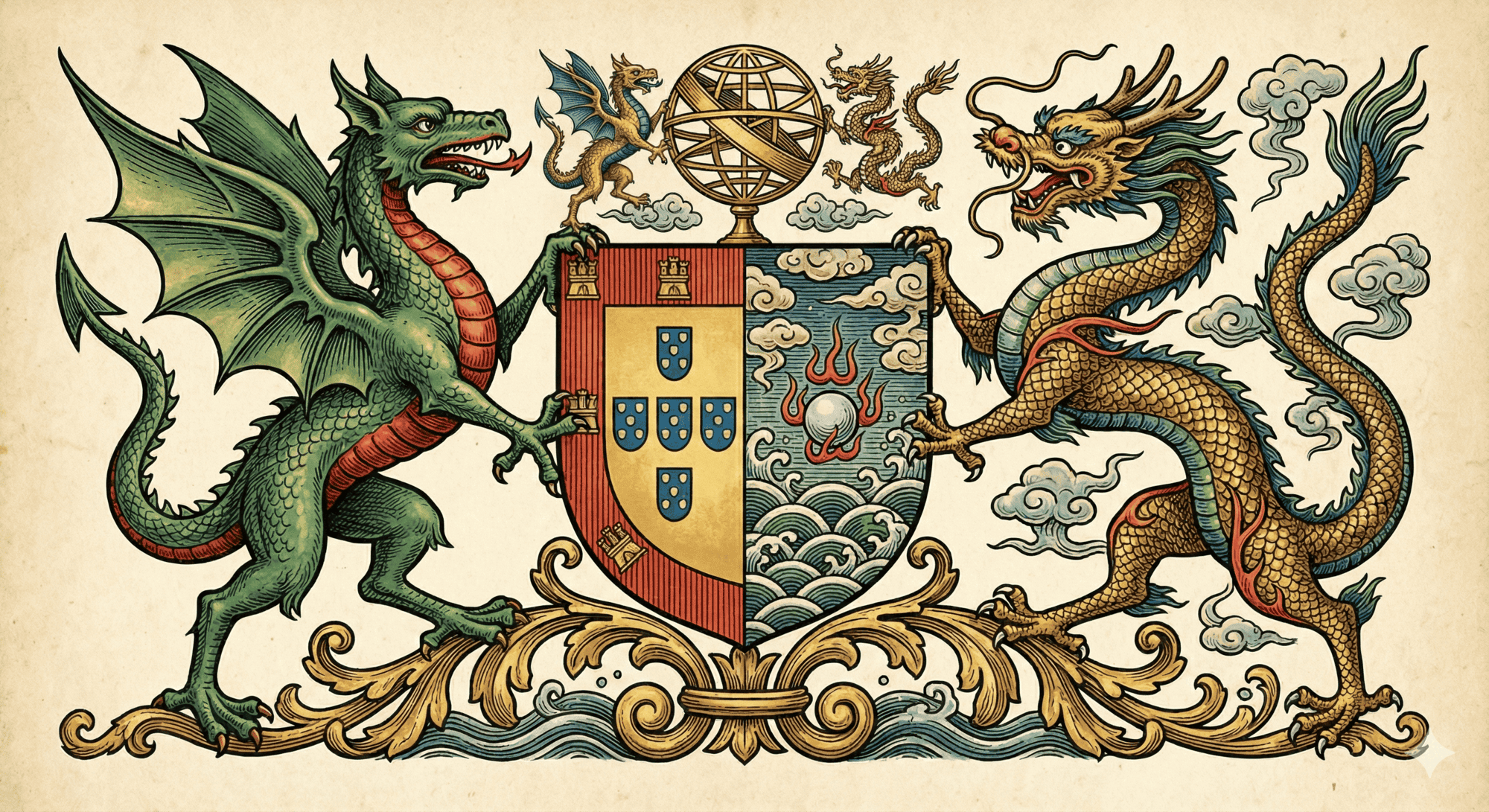
They say poetry is what gets lost in translation. I prefer to subscribe to the more optimistic view that poetry is what gets found in new places, wearing a different coat but carrying the same heart.
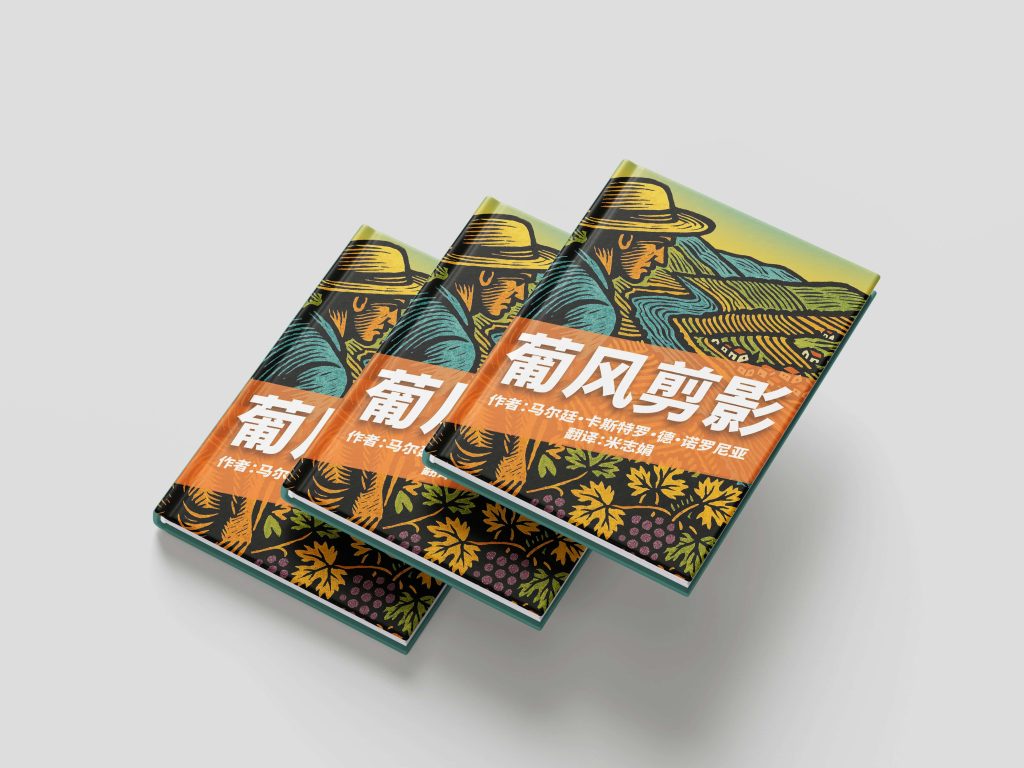
Writing my poetry collection, Retalhos Lusitanos, was an exercise in capturing the specific, untranslatable feeling of being Portuguese—the salt air of the Atlantic, the Calçada Portuguesa stones underfoot, that peculiar, delicious melancholy we call saudade. It is a book built of “scraps” (retalhos), a patchwork of memories and observations deeply rooted in our Lusitanian soil. So, you can imagine my mix of terror and absolute delight when I learnt these very specific local fragments were heading to a market of 1.4 billion people. I am thrilled to announce that Retalhos Lusitanos has officially been translated into Chinese under the title 《葡风剪影》.
A Trans-European Journey (That Went a Bit Further)
This literary migration wasn’t just a happy accident or a stroke of luck. This translation is a proud contribution to the far-reaching Trans-European Journeys project, a prestigious consortium co-funded by the European Union’s Creative Europe programme.
While the name suggests a strictly continental affair, the project’s vision is impressively global. It operates on the philosophy that Europe’s stories shouldn’t just echo within our borders. My publisher, Letras Ausentes, joined forces with a formidable network of partners from Sweden, Greece, the Czech Republic, and Armenia. The collective goal? To circulate European literature beyond the usual suspects and export our culture to entirely new linguistic territories.

Being selected for this initiative is a massive honour, particularly given the specific flight path my book is taking. Truth be told, I am merely the lucky passenger on this voyage. The decision to include Retalhos Lusitanos was made by my publisher, and I am deeply grateful they chose my work for such an adventure. While their fellow consortium partners are working to connect Swedish, Greek, Armenian, and Czech readers worldwide, Letras Ausentes has committed to a distinct, far-reaching mission: bridging the gap to Asia. They selected my book as one of only five Portuguese works to be translated into Chinese, Korean, and Vietnamese, alongside two others being translated into Greek. Best of all, these new editions are not restricted to specific territories. They will be available globally, ensuring that speakers of these languages can access the work regardless of where they live. It is a profound validation that local stories, no matter how specific their geography, can hold a global resonance. It proves that the “periphery” of Europe has a central role to play in the global dialogue of letters.
From the Tagus to the Yangtze: The Art of Transcreation
The Chinese edition, Retalhos Lusitanos 《葡风剪影》, was translated by the talented Mi Zhijuan. We often underestimate the translator’s burden. Translation is never just about the words, especially with poetry. You aren’t just swapping words; you are swapping worlds. How do you translate the smell of grilled sardines in Alfama to a reader in Shanghai? How do you render the rhythm of a Fado lyric into Simplified Chinese characters?
It requires more than linguistic fluency; it requires emotional alchemy. Mi Zhijuan has not just translated these poems; she has transcreated them, spanning the distance between the Tagus and the Yangtze. To the readers in China discovering my work for the first time: Ni hao. I hope these verses offer you a window into the azulejos of Porto and the rolling vineyards of the Douro, seen through a fresh lens.
Why This Matters (And Not Just to My Ego)
For a Portuguese author, breaking into the Chinese market is rare territory. Typically, we rely on English or Spanish as bridge languages. To have a direct line to Chinese readership is a rare privilege that speaks volumes about the hard work of the Letras Ausentes team. They have been relentless in their mission to elevate Portuguese voices, refusing to let our literature remain a “niche” interest.
This launch proves that literature remains the most sophisticated technology we have for connection. In an era of digital noise, a poem is a quiet, persistent signal that says, “I feel this, do you feel it too?” We don’t need a visa to visit another country; we just need a good translator and an open mind.

Where to Find It
If you are curious to see what my Portuguese soul looks like in Simplified Chinese characters, or if you want to gift a copy to a friend in Beijing to show them what saudade tastes like, the book is available on my site now as Retalhos Lusitanos (Simplified Chinese).
For those who prefer the original flavour, unfiltered and in its native tongue, you can always find the Portuguese edition here.
Stay tuned for more updates on my literary travels. To see the full scope of Trans-European Journeys, you can visit the Letras Ausentes project page. If you haven’t already, sign up for my newsletter at the bottom of the page to get the latest dispatch from my desk.